Source Advanced Technology Raymond Mill for Construction, Mining, and Grinding
Find 30 Advanced Technology Raymond Mill units suitable for construction, mining, and fine grinding applications. Buyers can compare specifications like feed size, output fineness, and motor power across models YGM85, YGM95, and MTW110 from Chinese manufacturers.
Key considerations
Products List


Raymond Mill for High-Precision Powder Processing in Multiple Mndustries
$18000.00 - $38000.00
MOQ: 1 Pieces


Advanced Raymond Mill for Customizable Mining and Grinding Efficiency
$25000.00 - $40000.00
MOQ: 1 Sets


Raymond Mill Environmentally Friendly Design Low Energy Consumption and High Efficiency
$5700.00 - $6300.00
MOQ: 1 Pieces

Raymond Mill, Ultrafine Mill, Equipped with a High-Efficiency Classifier
$5700.00 - $6300.00
MOQ: 1 Pieces




Comprehensive Sourcing Guide
Strategic Sourcing Guide for Advanced Technology Raymond Mill Equipment
The global demand for high-efficiency grinding solutions has elevated the Raymond mill from a standard industrial component to a critical asset in advanced mineral processing. For procurement professionals, navigating the market for an Advanced Technology Raymond Mill requires a disciplined approach that balances technical specifications with compliance verification. This guide synthesizes observed market data to provide a structured framework for sourcing, ensuring that buyers can make informed decisions based on verified attributes rather than speculative claims. The focus remains on the tangible characteristics of the equipment, including motor configurations, dimensional constraints, and output fineness, to align procurement strategies with actual operational needs.
Technical Specifications and Performance Parameters
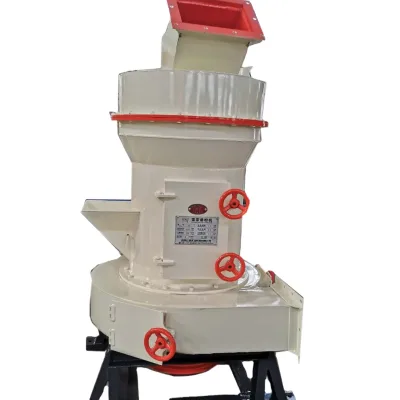
Understanding the technical architecture of a Raymond mill is the first step in defining procurement requirements. The equipment is fundamentally designed for the grinding of various ores, including metallic and non-metallic varieties. A critical observation in the current market is the variation in roller configurations, which directly impacts grinding efficiency. Buyers may encounter models with three rollers or four rollers, such as those specified with a "No. of Roller" count of 3 or 4. This distinction is vital for capacity planning, as the number of rollers influences the throughput and the uniformity of the final product.
The motor configuration is another primary technical differentiator. The observed data indicates the prevalence of AC motors with power ratings around 22KW for main engines, though larger configurations may exist with blower motors reaching 45KW. The main engine speed typically operates within a range of 130 to 150 R/Min, which must be synchronized with the feed size to prevent mechanical stress. The maximum feed size is a hard constraint; specifications often cite limits of 20mm to 25mm. Exceeding these limits can damage the grinding rings, which are often constructed from specialized materials like Molybdenum to withstand high abrasion.
Output fineness is the most critical performance metric for buyers targeting specific industrial applications. The market offers a range of output sizes, typically falling between 0.033mm and 0.613mm, or expressed in mesh sizes from 30 to 425. Some advanced configurations may achieve finer outputs down to 0.038mm. The production capacity, measured in tons per hour, varies significantly based on the model, with observed ranges spanning from 1.2 to 6.6 tons per hour. Buyers must align these capacity figures with their production targets, noting that the overall dimensions of the machine, which can exceed 7000mm in length and 5000mm in width, dictate the spatial requirements of the installation site.
Compliance, Certification, and Standard Verification
In the international B2B market, compliance is not merely a formality but a prerequisite for operational safety and market access. The supplied product data highlights several key standards that buyers should verify during the due diligence process. Common certifications observed in the sector include CE, ISO, and SGS. These certifications indicate that the equipment meets specific safety, quality, and environmental standards. However, buyers must treat these as observations of specific listings rather than universal guarantees for all available units.
When evaluating a supplier, it is essential to request valid certificates that correspond to the specific model being purchased. For instance, while some listings reference "YGM85" as a standard, others may list it as a model number, creating potential confusion. Buyers should ensure that the certification documents explicitly cover the model in question and the specific manufacturing origin, which is frequently cited as Henan, China. The presence of a "CE, ISO, SGS Certificate" is a strong indicator of adherence to international norms, but the verification process must confirm that these certificates are current and issued by accredited bodies.
Furthermore, the production standards should be scrutinized to ensure they align with the buyer's local regulatory environment. The "International Packing Standard" mentioned in product attributes suggests a commitment to safe logistics, but this should be confirmed against the specific packaging requirements of the destination country. Buyers should also verify if the equipment meets any additional local safety standards that may not be covered by the general CE or ISO marks. This rigorous verification process mitigates the risk of importing non-compliant machinery that could lead to operational shutdowns or legal liabilities.
Cost Drivers and Pricing Structure Analysis
The pricing of advanced Raymond mills is influenced by a complex matrix of factors, including motor power, roller count, material composition, and customization options. The observed price range in the market spans from 1,000 USD to 600,000 USD, a vast disparity that reflects the diversity of configurations available. This wide range indicates that price is not a linear function of the base model but is heavily dependent on the specific technical requirements of the buyer.
Key cost drivers include the motor power, with units featuring 22KW main motors and 45KW blower motors commanding different price points than those with higher capacities. The material quality, particularly the use of Molybdenum for grinding rings, adds significant value and cost to the unit. Additionally, the customization availability is a major factor; buyers seeking specific colors like White, Blue, or Red, or those requiring custom dimensions, will incur higher costs. The weight of the machine, ranging from 10 tons to 13.5 tons, also impacts shipping and installation expenses, which are often separate from the unit price.
Buyers should be wary of low-end prices that may compromise on critical components like the motor type or the quality of the grinding rings. Conversely, the highest price points should be justified by superior output fineness, higher production capacity, or advanced customization features. The Minimum Order Quantity (MOQ) is observed to be as low as 1 unit, offering flexibility for small-scale operations, but this should be weighed against the potential economies of scale for larger procurement volumes. Understanding these cost drivers allows buyers to negotiate more effectively and allocate their budget to the features that matter most for their specific application.
Typical Applications and Operational Context
The versatility of the Raymond mill makes it suitable for a broad spectrum of industrial applications, primarily in the construction and mining sectors. The product attributes explicitly list "Construction" and "Mine" as primary application areas. In the mining sector, the equipment is utilized for the excavation and processing of both metallic and non-metallic ores. The ability to process materials with a feed size of up to 25mm and produce output fineness as fine as 0.033mm makes it ideal for preparing raw materials for further processing or for direct sale as a finished product.
In the construction industry, the mill is used to grind materials for use in concrete, asphalt, and other building composites. The specific output size of 0.613-0.033mm is particularly relevant for applications requiring fine powders. The "Mining Object" attribute, which includes metallic and non-metallic ore excavators, suggests that the machine is robust enough to handle the harsh conditions of mining environments. Buyers should consider the specific ore type they intend to process, as the hardness and abrasiveness of the material will influence the wear rate of the grinding rings and the overall lifespan of the equipment.
The operational context also includes the installation requirements. The "Under The Guidance of Engineer" attribute highlights that these machines are not plug-and-play solutions. Successful deployment requires professional oversight to ensure that the dimensions, such as the 710059007900mm footprint, are compatible with the facility layout. The "After-Sale Service" including training and technical support is crucial for maintaining operational efficiency, especially in remote mining locations where technical expertise may be limited.
Supplier Evaluation and Service Capabilities
Selecting the right supplier is as critical as selecting the right machine. The market data indicates that suppliers offer a range of services, from factory visits to comprehensive after-sale support. The "Factory Visiting: Most Welcomed" attribute suggests a level of transparency that buyers should leverage. Visiting the manufacturing facility allows for a direct assessment of production capabilities, quality control processes, and the actual condition of the machinery.
Buyers should prioritize suppliers who offer robust after-sale services, including training and technical support. The "1 Year" warranty period is a standard offering, but the scope of this warranty should be clearly defined. Does it cover the motor, the grinding rings, or the entire assembly? The "Installation: Under The Guidance of Engineer" requirement implies that the supplier must provide qualified personnel to oversee the setup, which is a significant value-add.
Additionally, the delivery timeline is a key factor in supplier evaluation. The observed "Delivery Detail" of "20 days After The Down Payment" provides a benchmark for lead times. Buyers should verify if this timeline is consistent across different models and if it accounts for international shipping and customs clearance. The "International Packing Standard" is another indicator of a supplier's professionalism, ensuring that the equipment arrives in good condition despite long-distance transport.
Quality Control and Long-Term Procurement Considerations
Ensuring the long-term reliability of a Raymond mill requires a proactive approach to quality control and maintenance. The "New" condition of the products is a baseline expectation, but buyers must verify the quality of individual components. The "Weight" of the machine, ranging from 10 to 13.5 tons, suggests a heavy-duty construction, but the actual durability depends on the quality of the materials used, such as the Molybdenum grinding rings.
Long-term procurement considerations include the availability of spare parts and the ease of maintenance. The "Customization: Available" attribute suggests that suppliers may offer tailored solutions, but buyers should ensure that these customizations do not compromise the availability of standard spare parts. The "Yield" range of 1.2-4.6 tons per hour should be monitored over time to ensure the machine maintains its performance. Any deviation from the specified output fineness or production capacity may indicate wear or mechanical issues.
Finally, buyers should consider the total cost of ownership, which includes energy consumption, maintenance costs, and potential downtime. The "Motor Power" of 22KW and the "Blower Motor" of 45KW are significant energy consumers, and the efficiency of these motors will impact operational costs. By focusing on these long-term factors, buyers can make procurement decisions that ensure the Raymond mill remains a productive asset for years to come, rather than a short-term solution.
Comparative Analysis of Key Models
To assist in decision-making, the following table summarizes the key differences observed among the various models available in the market. This comparison highlights the variations in dimensions, capacity, and technical specifications that buyers should consider when selecting a specific unit.
| Feature | Model YGM95 | Model YGM85 | Model MTW110 |
|---|---|---|---|
| Grinding Ring Diameter (mm) | 950 | 830 | 1103 |
| Number of Rollers | 4 | 3 | Not Specified |
| Main Engine Speed (R/Min) | 130 | 150 | Not Specified |
| Max Feed Size (mm) | 25 | 20 | Not Specified |
| Output Fineness (mm) | 0.613-0.033 | 0.613-0.033 | 1.6-0.038 |
| Production Capacity (T/H) | 2.1-5.6 | 1.2-4.6 | 2.5-6.6 |
| Overall Dimensions (mm) | 710059007900 | 530041005200 | 761073858205 |
| Total Weight (T) | 10 | Not Specified | 13.5 |
| Main Power (KW) | 22 | 22 | Not Specified |
| Blower Motor (KW) | Not Specified | Not Specified | 45 |
This table illustrates that while the core function remains the same, the specific application requirements will dictate the choice of model. The YGM95 offers a larger grinding ring and higher capacity, suitable for heavy-duty operations, while the YGM85 is more compact with a slightly lower capacity. The MTW110 model, with its larger dimensions and higher blower motor power, appears designed for maximum throughput and finer output. Buyers must carefully match these specifications to their operational needs to ensure optimal performance.
FAQs
What is the maximum feed size for this equipment?
The maximum feed size is 25mm, though some models accept up to 20mm. Exceeding these limits can damage the grinding rings, so material must be pre-crushed to fit these specifications.
Which certifications do these mills typically hold?
Common certifications include CE, ISO, and SGS certificates. Buyers should verify that these documents correspond to the specific model and origin, as these marks indicate adherence to international safety and quality standards.
How long is the delivery time after payment?
Delivery typically takes 20 days after the down payment is received. This timeline applies to the production phase, and international shipping or customs clearance times are not included in this estimate.
Can the machine be customized for specific colors?
Yes, customization is available for colors such as white, blue, or red. Buyers can request specific color requirements to match their facility branding, which may affect the final unit price.
What is the output fineness range for the product?
The output fineness ranges from 0.613mm down to 0.033mm. Some advanced configurations can achieve finer outputs, making the machine suitable for various industrial grinding applications requiring precise particle sizes.
How many rollers are installed in the main unit?
Models vary with either three or four rollers installed in the main unit. The number of rollers directly influences grinding efficiency and throughput capacity, so select based on your production volume needs.
What is the warranty period for the equipment?
The standard warranty period is one year for the main components. This coverage ensures protection against manufacturing defects, but specific terms regarding wear parts like grinding rings should be confirmed with the supplier.